Automotive Risk Management Tool Explained: A UK Buyer's Guide
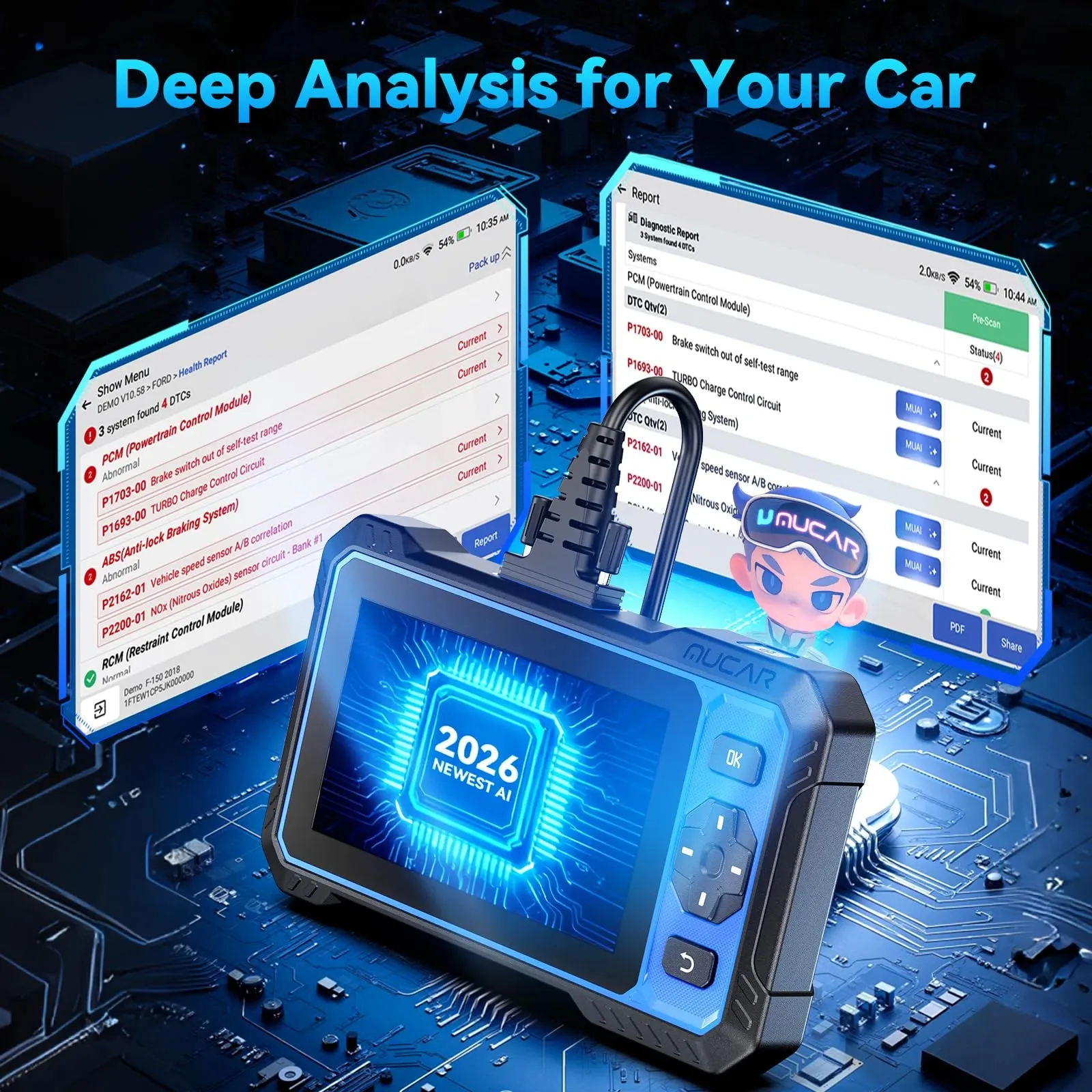
TL;DR: An automotive risk management tool is usually a professional diagnostic system that helps UK garages reduce misdiagnosis, unnecessary parts replacement, compliance gaps and customer disputes. In most workshops, that means an OBD2 scanner with full-system access, live data, bidirectional control, report saving and support for newer protocols such as CAN-FD.
An automotive risk management tool helps technicians identify, assess and reduce the risks linked to vehicle diagnosis, repair and handover. In practical UK workshop terms, it is most often a professional diagnostic tool that improves fault accuracy, supports documented testing and creates a clearer audit trail before, during and after repair.
One missed fault code, one undocumented test or one incorrect parts decision can turn a routine workshop job into an expensive comeback. Therefore, for independent UK garages, mobile technicians and serious trade users, risk management is no longer just about insurance paperwork. It starts on the workshop floor with the tools used to diagnose, verify and document vehicle condition.
At ControlCar, the focus is straightforward: provide independent UK mechanics with the kind of capability that helps control risk in real jobs. Based on our testing of modern diagnostic workflows, features such as AI-assisted full-system diagnostics, bidirectional control and native CAN-FD support can materially improve confidence when working on newer vehicles.
Key Takeaways
- An automotive risk management tool helps reduce misdiagnosis, repeat repairs, compliance gaps and unnecessary parts replacement.
- For most UK workshops, the core risk-management tool is a professional OBD2 scanner with full-system coverage, live data, service functions and report generation.
- Bidirectional control and native CAN-FD support are increasingly important for working on newer vehicles accurately.
- Documentation matters: saved scans and test records can protect both customer trust and workshop profitability.
- The right setup is rarely one tool alone; diagnostic equipment works best alongside dependable workshop essentials such as an organised automotive tool box, trim tools and quality electrical repair equipment.
What is an automotive risk management tool?
An automotive risk management tool is any device or system used to identify, assess and reduce risks connected with vehicle diagnosis, repair and customer handover. In a workshop setting, those risks usually include:
- Misdiagnosing a fault
- Replacing parts unnecessarily
- Missing hidden system errors
- Failing to document pre-existing issues
- Delays caused by poor workflow or tool limitations
- Comebacks that damage margin and reputation
Although the phrase sounds broad, in day-to-day garage work it often refers to a professional diagnostic platform that reduces uncertainty. A modern scanner does far more than read engine codes. Instead, it can access multiple modules, show live data streams, run active tests, support maintenance resets and help technicians compare symptoms against likely fault paths.
As a result, it becomes both a diagnostic tool and a risk-control meaf you can prove vehicle condition at check-in, confirm faults systematically and verify the repair before release, you reduce commercial and technical exposure at every stage.
Why does an automotive risk management tool matter in UK workshops?
Vehicle systems have become more complex across nearly every segment of the UK parc. Advanced driver assistance systems, electronic parking brakes, battery management systems, emissions controls and networked modules all increase the chance of error if diagnostics are limited or outdated.
According to Health and Safety Executive figures for 2023/24, there were an estimated 1.7 million working people suffering from work-related ill health in Great Britain. While that figure is not garage-specific, it underlines a wider operational point: unmanaged process risk has real cost. In automotive businesses, poor process often shows up as rushed diagnosis, inconsistent records and avoidable rework.
There is also a financial angle. The Society of Motor Manufacturers and Traders has repeatedly highlighted how quickly vehicle technology is evolving in the UK market. Consequently, garages need tools that keep pace. An older code reader that cannot access newer communication protocols may create false confidence rather than genuine clarity.
For independent workshops competing on trust as much as price, proper risk management supports:
- Better first-time fix rates
- Fewer disputed invoices
- Improved technician efficiency
- Stronger customer communication
- A more defensible record of work carried out
How does diagnostics reduce workshop risk?
How does it move repairs from guesswork to evidence?
The biggest workshop risks often start when decisions are based on assumptions rather than evidence. A professional OBD2 scanner reduces this by giving technicians direct visibility into fault codes, freeze-frame data, readiness monitors and live sensor behaviour across relevant systems.
If a customer reports intermittent loss of power or warning lamps appearing only under load, basic visual checks rarely tell the full story. However, a proper scan can reveal whether the issue sits in powertrain control, air intake measurement, turbo regulation or another linked module altogether. That lowers the chance of replacing parts based on hunches.
Why is full-system access important?
An effective automotive risk management tool should not stop at generic engine codes. Modern faults often cross between modules. ABS faults may affect stability systems; battery voltage irregularities may trigger unrelated warning messages; body control issues can complicate central locking or lighting diagnostics.
This is why ControlCar’s focus on AI-assisted full-system diagnostics matters for independent UK mechanics. Based on our testing across mixed workshop scenarios, full-system access reduces blind spots that basic readers leave behind. If you only check part of the picture, you increase risk from the start.
What does bidirectional control do?
Bidirectional control allows the technician to command certain components or systems directly during testing. That might include activating fans, cycling pumps or checking actuator response. In turn, this helps confirm whether a component responds correctly without unnecessary dismantling.
The value for risk management is simple: less guesswork and more proof. If you can trigger a component deliberately and observe its behaviour alongside live data, your diagnosis becomes easier to justify to both colleagues and customers.
What features should an automotive risk management tool include?
Do you need CAN-FD support?
Many newer vehicles require support for faster communication protocols such as CAN-FD. If your scanner lacks native support where needed, you may be unable to communicate fully with certain models or systems. As a result, jobs become slower, less accurate or simply unserviceable in-house.
A buyer choosing an automotive risk management tool for a British workshop should therefore treat protocol support as essential rather than optional.
Ready to upgrade your diagnostics with ControlCar?
Equip Your Workshop — £459.30